What the Tulum ruins actually are
Tulum was a port first and everything else second, and that framing changes the visit. Between roughly 1200 and the Spanish arrival, in the Late Postclassic, this city controlled a maritime trade route running up and down the Caribbean coast moving obsidian, jade, salt, cotton and honey. Canoes came in through the cove you can still see from the edge of the cliff.
Its pre-Hispanic name, according to 16th-century chronicles, was Zamá, roughly "dawn." Tulum means fence or wall and came later. It describes the first thing you see when you arrive: a wall that surrounds the city on three sides, 3 to 5 meters tall and around 8 meters thick. The fourth side didn't need one, because that's the cliff and the sea below it.
One thing most brochures get wrong: Tulum was not the only walled Maya city. Mayapán, Becán and Ek Balam were walled too. What is genuinely unusual, and why the photo shows up everywhere, is the combination of wall, limestone cliff and turquoise Caribbean behind it.
Now the honest part. It's a small site. You can walk all of it in 45 minutes to an hour and a half at an unhurried pace, and you can't climb anything. If you want scale and a climb, that's Cobá, about 45 minutes away by car, where Nohoch Mul reopened for climbing in December 2025 with a wooden staircase, groups of 15 and hours from 8:00 to 15:30. We break that trip down in our Cobá from Tulum guide.
Getting there from downtown Tulum
The archaeological zone sits north of town along the federal highway, about three kilometers from the center. From an apartment on Avenida Cobá it's a 10-minute bike ride and the road is flat the whole way. Some stretches have plenty of shoulder and some don't, so ride calmly and put a rear light on the bike if you plan to come back near sunset.
| How you get there | Time from downtown | What to know |
|---|---|---|
| Bike | ~10 min | Flat the whole way. There's a bike path inside the park, so you can skip the internal shuttle fee. |
| Colectivo | 10-15 min plus the wait | White vans along the highway. Cash, around 25 to 30 pesos. |
| Taxi | ~10 min | No meters here. Agree on the price before you get in. |
| Car | ~10 min | Paid parking, charged separately from admission. |
| Walking | 45-50 min | Along the highway with no shade. Only if you leave very early. |
Here's what trips people up: the park entrance is not the ruins entrance. From Acceso Centro to the archaeological zone and the beaches it's about two kilometers. You can walk it, ride the internal bike path (both free) or pay for the electric shuttle, which costs 20 pesos for adults and 10 for kids. It's optional. If someone tells you it's mandatory, it isn't.
Uber and DiDi don't operate normally in Tulum, so your real options are a bike, a colectivo, a taxi with a price agreed upfront, or your own car. If having wheels for the week makes sense, bikes rent by the day at several shops downtown, and a car only pays off if you plan to drive out to Cobá or the lagoon.
Hours and last entry
The archaeological zone is open daily from 8:00 to 17:00, with last entry at 15:30. That cutoff is enforced. Show up at 15:45 and you're not getting in, and the walk from parking to the ticket window can eat 20 minutes on its own. Plan to be at the window by 15:00 at the latest.
Parque del Jaguar, the protected area that wraps around the ruins and the beaches, closes later than the site itself, somewhere between 18:00 and 19:00 depending on the season. So you can walk out of the ruins at 17:00 and still have beach time without paying anything again.
What it costs in 2026
This is where half the blogs are still wrong. On July 20, 2026 a federal decree took effect, the Plan Tulum Renace, published in Mexico's official gazette, and it rewrote the whole fee structure. The 515-peso figure still floating around online no longer applies.
| What you're paying for | Mexican nationals | Foreign visitors |
|---|---|---|
| Parque del Jaguar (beaches and trails) | Free | Around 100 MXN, already included in the 265 |
| Archaeological zone, Monday to Saturday | 80 MXN | 265 MXN total |
| Archaeological zone, Sunday | Free | 265 MXN total |
| Internal electric shuttle (optional) | 20 MXN adult / 10 MXN child | 20 MXN adult / 10 MXN child |
The 265 pesos for foreign visitors already covers both the park and the archaeological zone, so there's no second surprise charge at a second window. That's roughly 14 dollars, which makes it one of the better-value archaeological sites in the country. Three practical notes: parking is separate and isn't collected by INAH; bring cash even though the ticket window takes cards, because the cash line moves faster; and INAH keeps its usual waivers for minors, students, teachers and seniors with a valid ID, so bring it if that's you.
What to look at inside
El Castillo
The building from the photos: the temple on the cliff, at the highest point of the site. You haven't been able to climb it for years, and you see it from the path below and from either side. Its window openings have been interpreted as a night-time visual reference to help canoes find the gap in the reef, which fits the port-city logic.
Temple of the Wind God
It sits on a small rise on the north side and you recognize it by the round base, which is unusual for Maya architecture on this coast. That circular plan links it to Kukulcán. It's also the best viewpoint over the cove, and most people who take their favorite shot from there have no idea they're standing next to a temple.
Temple of the Frescoes
The most interesting building if you like detail. It still holds murals with deities and underworld motifs, plus figures of the descending god, that upside-down figure that repeats across several structures at Tulum. You view it from the path behind a rope, so get as close as they let you and give it a minute.
The wall, the Halach Uinic house and the iguanas
The original entrances are narrow passages cut through the wall, and they're worth looking at from outside before you go in so you register how thick that thing is. The Casa del Halach Uinic was the ruler's residence. And yes, you'll see dozens of iguanas sunning themselves on the stones. Don't touch them and don't feed them.
Can you get down to the beach at the ruins?
Short answer: don't build your day around it. The little cove directly under El Castillo, the one you used to reach by a wooden staircase, has been closed to the public since 2020, and 2026 sources contradict each other about whether it reopened. Some guides describe it as open, others still report it closed. The sensible move is to ask at the entrance the day you go. On top of that, sea turtle nesting season runs May through October and the north end of that beach gets roped off entirely.
What is guaranteed are the Parque del Jaguar beaches: Pescadores, Santa Fe, Playa Maya, El Mangle and El Faro. You reach them on foot or by bike from the park entrances. One caveat almost nobody spells out: they're free for Mexican nationals, but foreign visitors pay park access, around 100 pesos, even for the beach alone. If you're also going into the archaeological zone, that charge is already inside the 265. Playa Paraíso, which a lot of people lump into that list, is not one of them. It's a beach club past the ruins and it runs on minimum spend.
Here's a warning almost nobody gives you: 2026 is a record sargassum year. The season runs April through September and Quintana Roo had removed more than 93,000 tons by July. You might get a flawless beach or a shoreline packed with seaweed, and it flips day to day. Check our sargassum season guide and the public beaches guide before you head out.
Honest tips so the visit doesn't go sideways
- Get there at 8:00 sharp, not 8:30. Tour buses from Cancún and Playa del Carmen start landing between 10:00 and 13:00 and the site becomes a different place.
- There is no shade. The route is fully exposed over pale stone that throws the sun back at you. A hat is not optional.
- Water. At least a liter per person. There's little to buy inside and it's expensive.
- Closed shoes. The ground is packed limestone and uneven rock. Flip-flops will make you miserable.
- No drones, no big tripods. INAH bans both without a prior permit and security will hold them at the check.
- Reef-safe sunscreen, especially if you're swimming at the park beaches afterward.
- Cash. Ticket window, shuttle, parking and colectivo all go smoother with small bills.
- Guides. Certified guides work the entrance and usually charge per group rather than per person. Ask the full price before you start and check for the badge.
If you're stacking several hot days together, our what to pack for Tulum guide is worth a read before you zip the suitcase.
Accessibility
The main park paths are packed limestone and fairly flat, and the park lends all-terrain wheelchairs. There aren't many, so ask about them when you arrive at the access point rather than assuming one will be free. The electric shuttle covers the long stretch from the entrance to the archaeological zone. The clifftop overlook is accessible; the descent to the cove is not, under any scenario, because it's a wooden staircase. Strollers roll fine through the park, though inside the archaeological site there are steps and patches of loose stone.
How to build the day around the ruins
The classic mistake is saving the ruins for mid-morning and ending up walking around at 13:00 in 34-degree heat. This order works:
- 6:30. Yucatecan breakfast at Taquería Honorio, which opens at 6:30 and closes around 15:00, or earlier if they run out. Closed Tuesdays.
- 8:00. You're inside the ruins with the site nearly empty and good light.
- 10:00. Cenote. Gran Cenote and Calavera are 8 to 12 minutes by car from downtown and they're also quiet in the morning. We compare them in the cenotes near Tulum guide.
- 14:00. Lunch in town. Seafood at El Camello Jr., which is closed on Wednesdays, or al pastor at Antojitos La Chiapaneca, which is cash only.
- Evening. Pool, a nap, and a mojito at Batey around 20:00.
If you're here for several days and want ruins, cenotes, beach and town to fit together without repeating drives, the 3, 5 and 7-day itinerary already sequences it.
Where to stay so the 8 a.m. start is easy
All of the above depends on one thing: being close. From the beach hotel zone, making an 8:00 opening means waking up earlier and paying for a taxi. From downtown it's a 10-minute ride and you leave the apartment at 7:40.
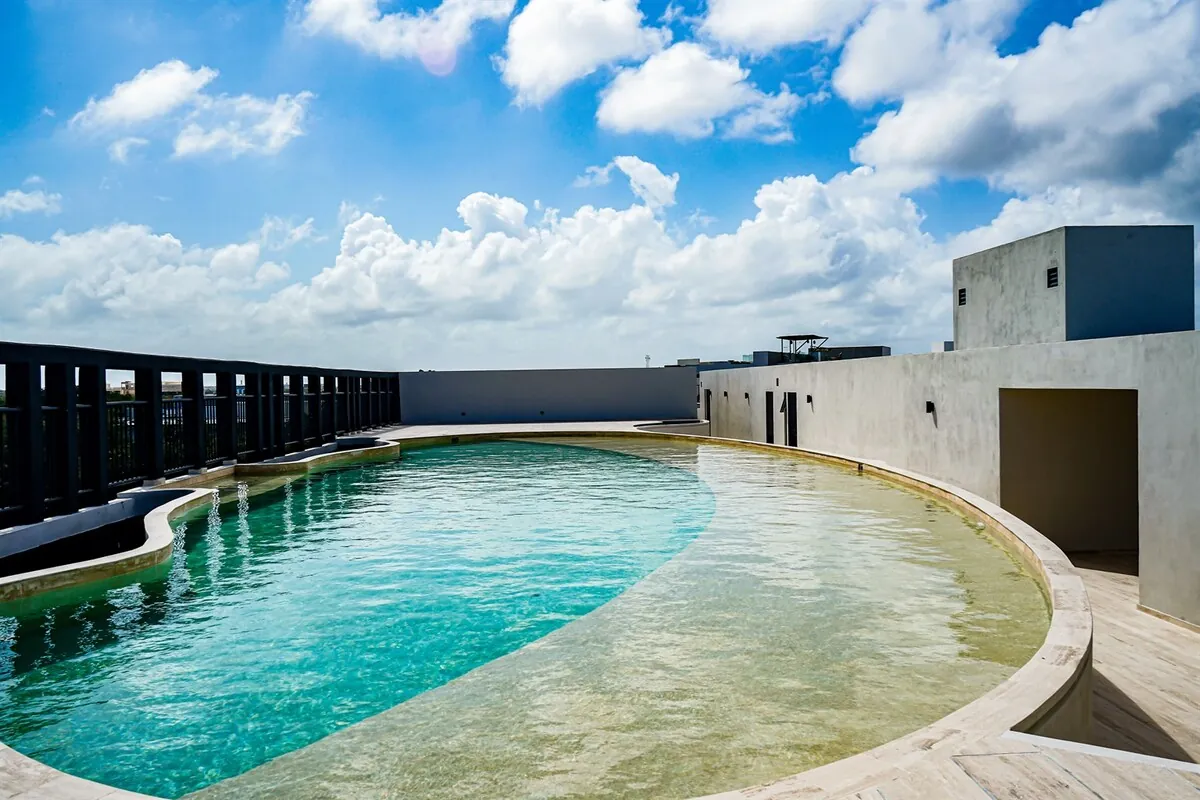
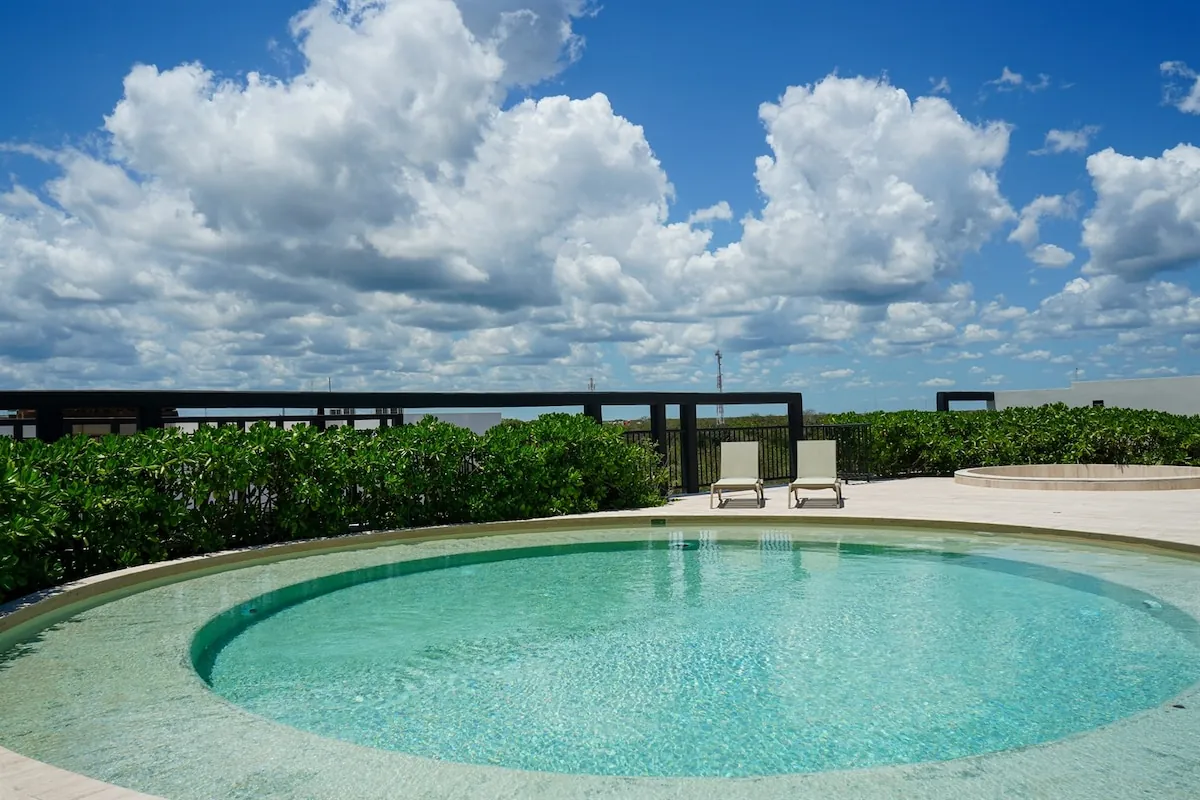
Hacienda Tuk is our apartment on Avenida Cobá, in the center of Tulum: two bedrooms, two bathrooms, full kitchen, pool and a rooftop. The kitchen matters more than it sounds like it does when you leave at 7:30 in the morning and get back at 15:00 hungry and not in the mood to sit down at a restaurant. You're 5 minutes on foot from Avenida Tulum, 10 minutes by bike from the ruins, 10 minutes by taxi from the beach, 30 minutes from Tulum airport and 45 from Cobá. For four people or a family, the math beats two hotel rooms. Photos, calendar and direct booking are here.
If you're still choosing a neighborhood, compare them in where to stay in Tulum.
Frequently Asked Questions
How much do the Tulum ruins cost in 2026?
Since the federal decree that took effect July 20, 2026, Parque del Jaguar is free for Mexican nationals; foreign visitors pay around 100 pesos for the park itself. The archaeological zone costs 80 pesos for Mexican nationals Monday to Saturday and is free on Sundays; foreign visitors pay 265 pesos total, which already covers both the park and the site. The 515-peso figure still listed on many blogs no longer applies. Parking and the internal electric shuttle (20 pesos per adult) are separate.
What are the hours and when is last entry?
The archaeological zone is open daily from 8:00 to 17:00 with last entry at 15:30, and that cutoff is enforced. Parque del Jaguar closes later, between 18:00 and 19:00 depending on the season, so the beaches are still open after the ruins shut.
Can you go down to the beach below the ruins?
Don't count on it. The cove under El Castillo has been closed to the public since 2020 and 2026 sources disagree about whether it reopened, so ask at the entrance the day you go. The Parque del Jaguar beaches (Pescadores, Santa Fe, Playa Maya, El Mangle and El Faro) are public, free and reachable on foot or by bike.
How far are the ruins from downtown Tulum?
About 10 minutes by bike from Avenida Cobá, flat the entire way. A colectivo takes 10 to 15 minutes plus the wait and runs around 25 to 30 pesos cash. A taxi is also about 10 minutes, but agree on the fare before getting in, since there are no meters and Uber and DiDi don't operate here.
How long do you need at the ruins?
Between 45 minutes and an hour and a half walking at a relaxed pace. It's a compact site and nothing is climbable. Add roughly 20 minutes for the stretch from the park access to the site entrance, whether you walk, bike or take the electric shuttle.
Is it doable with a wheelchair or a stroller?
Largely yes. The main paths are packed limestone and fairly flat, the park lends all-terrain wheelchairs (ask on arrival, there aren't many) and the electric shuttle covers the long stretch. The clifftop overlook is accessible; the descent to the cove is not, since it's a wooden staircase. Inside the archaeological site there are steps and loose stone.