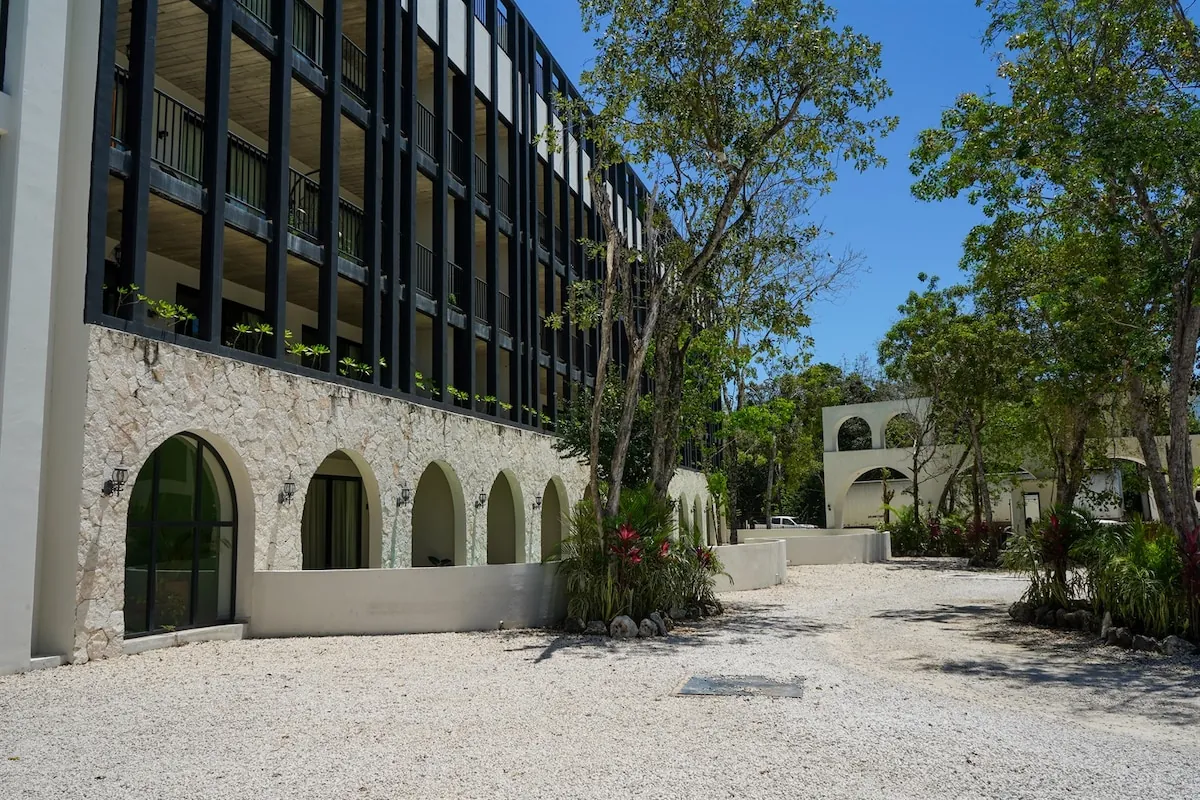
Moving to Tulum is not the same as visiting on vacation. When you live here day to day, what matters changes completely: how much you pay in rent, whether you can reach the supermarket without a car, whether you'll sleep through bar noise all night, and whether you'll find community or end up feeling isolated. This guide is for people actually moving here (nomads, couples, families, anyone trying out Caribbean life) who want the honest truth about each area, not the tourist-brochure version.
If what you want is where to stay for a few nights of vacation, read our guide to where to stay in Tulum instead, because the criteria are different. Here we're talking about living, not lodging. For the full picture on the topic, there's also the living in Tulum hub.
La Veleta: the digital nomad zone
La Veleta is, right now, the favorite of anyone arriving to work remotely. It's where you'll find the liveliest community of foreigners and young locals: cafes with good internet, coworking spaces, yoga classes, organic markets, and that feeling that there's always someone new to talk to. Rents are still reasonable compared to the premium areas, though they're climbing fast precisely because of this demand.
The honest flip side: La Veleta is one big construction site. There's building going up everywhere, and several streets are still dirt, which fills with mud and puddles in the rainy season. A bike or scooter helps, because walking distances get long. If dust, morning construction noise or unpaved streets bother you, keep that in mind. Even so, for the solo nomad or young couple, it's the best bet for balancing price, community and lifestyle.
Who it's for
- Digital nomads who want community and a good work vibe.
- Young couples who put lifestyle over total comfort.
- Anyone not scared off by dirt roads or construction in exchange for a better price.
Centro: the most practical option if you don't have a car
Centro is the most functional area for daily life. You've got everything at hand: supermarkets (the Super AKI is a go-to), banks, pharmacies, markets, shops and, key without a car, the colectivo hub right next to the Super AKI for getting to Playa del Carmen or Cancún. If you're going to live without a car, here you handle life on foot or by bike without depending on anyone.
The cost of that convenience is noise and tourism. Centro is the main avenue, with traffic, bars, music and constant activity. If you're sensitive to nighttime noise, check the apartment's exact location carefully before signing: one block in can be the difference between sleeping well or not. Rents are in a mid range.
Who it's for
- Anyone living without a car who wants everything within walking distance.
- Practical people who value services over quiet.
- Newcomers who want to sort out paperwork and logistics fast.
Aldea Zama: pretty, planned and pricier
Aldea Zama is the planned, postcard-perfect area: orderly streets, careful architecture, a sense of exclusivity and an aesthetic that looks great in photos. It sits halfway between Centro and the Hotel Zone, which makes it convenient for beach trips. The problem for a resident is twofold: it's notably more expensive and has far less local life. It's a fairly touristy area, with lots of vacation-rental apartments, so the community of permanent neighbors is colder and always changing.
If your budget is comfortable and you value security, order and aesthetics over neighborhood life, Aldea Zama can fit. But if you're after the "real Mexico," meeting people and spending wisely, you'll probably feel like you're in an expensive bubble.
Who it's for
- Higher budgets that prioritize aesthetics, order and a sense of exclusivity.
- Anyone who hits the beach often and doesn't mind overpaying for location.
Región 15 and local neighborhoods: the real, affordable Mexico
Región 15 and the local neighborhoods (which La Veleta practically blends into) are the most affordable and authentic option. This is where most Tulum locals live: corner stores, cheap kitchens, clearly lower rents and a far more Mexican, neighborhood feel. In exchange, you give up the premium amenities: fewer specialty cafes, fewer coworking spaces, more basic streets and services.
It's the ideal area for tight budgets, for anyone who wants to truly integrate into local life, or for families who want square footage and a stable community without paying the foreigner markup. Research it neighborhood by neighborhood, because safety and services vary quite a bit from one to the next.
Who it's for
- Tight budgets that want to stretch the rent as far as possible.
- Anyone who wants to join the local community, not the expat bubble.
- Families who prioritize space and roots over amenities.
Hotel Zone: for vacationing, not for living
Let's be clear: the Hotel Zone is not for living. It's wildly expensive, far from the supermarket, banks and anything practical, and it's designed 100% for tourism. As a resident you'd end up spending a fortune and losing hours in transit for any everyday errand. It's a spectacular place to spend a few days by the sea, and that's it.
How to choose based on your profile
- Solo nomad: La Veleta for community and coworking; Centro if you depend on public transit.
- Couple: La Veleta for lifestyle; Aldea Zama if budget is no issue and you want aesthetic calm.
- Family: local neighborhoods or Región 15 for space and roots; Centro for proximity to schools and services.
- Tight budget: Región 15 and the local neighborhoods, no question.
Getting around: how you'll actually move
One thing that catches many people off guard: in Tulum Uber and Didi don't operate normally. What does work is InDrive, local taxis (agree on the price before you get in), and above all the colectivos (shared vans) for getting between Tulum, Playa del Carmen and Cancún, which leave from Centro. For daily life inside town, bikes and scooters are king, especially in La Veleta and its dirt roads. Factor this in when choosing an area: the farther from Centro you live, the more you depend on having your own transport.
How booking direct with the host works
You pick your dates, the button opens WhatsApp with them already written in, and you hit send. The host answers with whether those nights are open and what the rate is for that exact stretch, since it moves with the season and the length of the stay. If it works for you, you settle the payment right there, in writing, and the dates are held.
For longer stays, a few weeks or a few months, there's real room to agree on a better rate. Being upfront about it: booking this way means there's no platform system sitting in the middle, no checkout screen, no automated cancellation button. What there is instead is a local host who lives in Tulum, answers quickly and in your language, and puts the terms in writing before you send anything.