What is downtown Tulum
Downtown Tulum, also known as Tulum Pueblo, is the urban part of town, separate from the beach strip that shows up in most photos. This is where you'll find Avenida Tulum, the main street, lined with banks, pharmacies, supermarkets, markets, local restaurants, and tour agencies. It's where much of the population lives and works, so prices tend to be more reasonable than in the hotel zone.
Geographically, Tulum is divided into several areas: Downtown (Centro/Pueblo), the residential neighborhoods of La Veleta and Aldea Zama, and the hotel zone along the coast. Downtown works as a convenient home base because it's close to almost everything and has all the daily essentials you'll need.
What to do in downtown Tulum
Downtown isn't a postcard destination, but it has its own rhythm and is a practical base for planning the rest of your trip. Here are concrete things you can do without going far:
- Walk Avenida Tulum: about a 5-minute walk from most of downtown gets you to the main street, perfect for running errands, exchanging money, or booking tours.
- Rent a bike: the most practical way to get around. From downtown you can pedal to the Mayan ruins in about 10 minutes. If you're in a group or prefer not to pedal, a golf cart is the comfy way to get around the town.
- Eat local food: taco stands, seafood spots, and Yucatecan kitchens at prices much more affordable than by the beach.
- Visit markets and shops: to buy fruit, water, crafts, and groceries if you're staying in an apartment with a kitchen.
- Head out to cenotes and the beach: downtown is a great base for short getaways; real distances are below.
If you want to dig deeper into the natural and archaeological attractions, check out our guide to cenotes, ruins, and the beach near downtown, where we explain how to get to each one from the pueblo.
Where to eat downtown
Eating is one of the pueblo's biggest advantages. While the hotel zone charges resort prices, downtown serves honest cooking at local prices. These spots have been around for years, and at several of them you'll see more locals than tourists:
- Taquería Honorio: the Yucatecan breakfast institution: cochinita pibil and lechón on handmade tortillas. It opens early and closes mid-afternoon, so go before you head out for the day.
- Antojitos La Chiapaneca: tacos al pastor at neighborhood prices, on Avenida Tulum at the corner of Acuario. It's almost always packed (a good sign) and cash only.
- El Camello Jr.: the town's classic seafood joint: ceviche, tostadas, and fried fish in generous portions.
- Burrito Amor: on Avenida Tulum, a fresher, lighter option with good vegetarian choices.
- Ki'bok: specialty coffee to start the day before you grab your bike.
One honest tip: ask the price before ordering at places without a visible menu, and keep cash on hand, since not all small businesses accept cards.
Bars and nightlife in the pueblo
Tulum's big party scene lives at the beach, but downtown has its own thing going, more relaxed and at pueblo prices:
- Batey Mojito & Guarapo Bar: the best-known bar downtown, on Calle Centauro Sur. Mojitos made with sugarcane pressed on the spot and live music almost every night. Arrive early if you want a table.
- The Avenida Tulum terraces: between Centauro and Orión you'll find a cluster of cantinas and bars that change names often; walk the avenue at dusk and step into whichever has a crowd.
If your plan is DJs until sunrise, that scene is in the beach zone: we cover it in our guide to the best beach clubs in Tulum. Downtown nights are more about a table, live music, and conversation.
How to get around Tulum from downtown
Getting around efficiently is key to enjoying Tulum without overspending. Here are the real options and when each one makes sense:
- Bike: the most practical and affordable option. Good for downtown, the ruins (~10 minutes), and short trips. Most accommodations can help you rent one.
- On foot: within downtown, almost everything is a 5-10 minute walk.
- Taxi: useful for the beach (~10 minutes) or at night, but expensive; agree on the fare before getting in, since they don't use meters.
- Colectivo: shared vans, affordable, good for getting around the highway and to nearby towns.
To get to Tulum, the Tulum Airport (TQO) is about 30 minutes from downtown, while Cancún is around 1 hour 45 minutes away by car or ground transportation.
Real distances from downtown
| Destination | Approximate time | How to get there |
|---|---|---|
| Avenida Tulum | 5 minutes | On foot |
| Beach | ~10 minutes | Taxi |
| Mayan ruins | ~10 minutes | Bike |
| Gran Cenote / Cenote Calavera | 8-12 minutes | Car |
| Tulum Airport (TQO) | ~30 minutes | Car |
| Cancún | ~1 h 45 min | Car / transportation |
Downtown vs. the hotel zone: which is right for you
The big question when planning a trip to Tulum is where to stay: downtown or the hotel zone. There's no single right answer — it depends on your budget and how you want to spend your days. This table sums up the real differences:
| Aspect | Downtown (Pueblo) | Hotel zone |
|---|---|---|
| Prices | More affordable | High |
| Beach access | ~10 min by taxi | On foot |
| Daily services | Supermarkets, banks, pharmacies | Limited |
| Atmosphere | Local and everyday | Touristy and beach-focused |
| Getting around | Bike, on foot, taxi | Bike or expensive taxi |
| Best for | Longer stays, tighter budgets | Those who prioritize being right on the water |
In short, downtown makes sense if you want a balance between comfort and cost, while the hotel zone makes sense if your absolute priority is waking up next to the sea and you don't mind paying more for it.
Safe, modern areas near downtown
A common question is which part of town to stay in. Downtown is safe in its busy areas: life happens along Avenida Tulum and the nearby streets stay lively into the night. The usual travel rules apply: don't leave valuables in sight, and late at night take a taxi instead of walking dark streets.
Around the pueblo, two residential areas have grown fast in recent years:
- Aldea Zama: a planned development between town and the beach, with wide streets, good lighting, and new condos. It's Tulum's modern quarter, though prices get close to beach levels and you'll depend on a bike or car for almost everything.
- La Veleta: a neighborhood in transition west of downtown: local homes, cafés, and condos side by side. Cheaper than Aldea Zama, with some streets still unpaved.
For a first visit, downtown remains the most practical base: you can walk to everything and don't depend on transfers. If you're torn between areas, our guide to where to stay in Tulum compares them all with pros and cons, and is Tulum safe to visit? answers the safety question head-on.
Where to stay in downtown Tulum
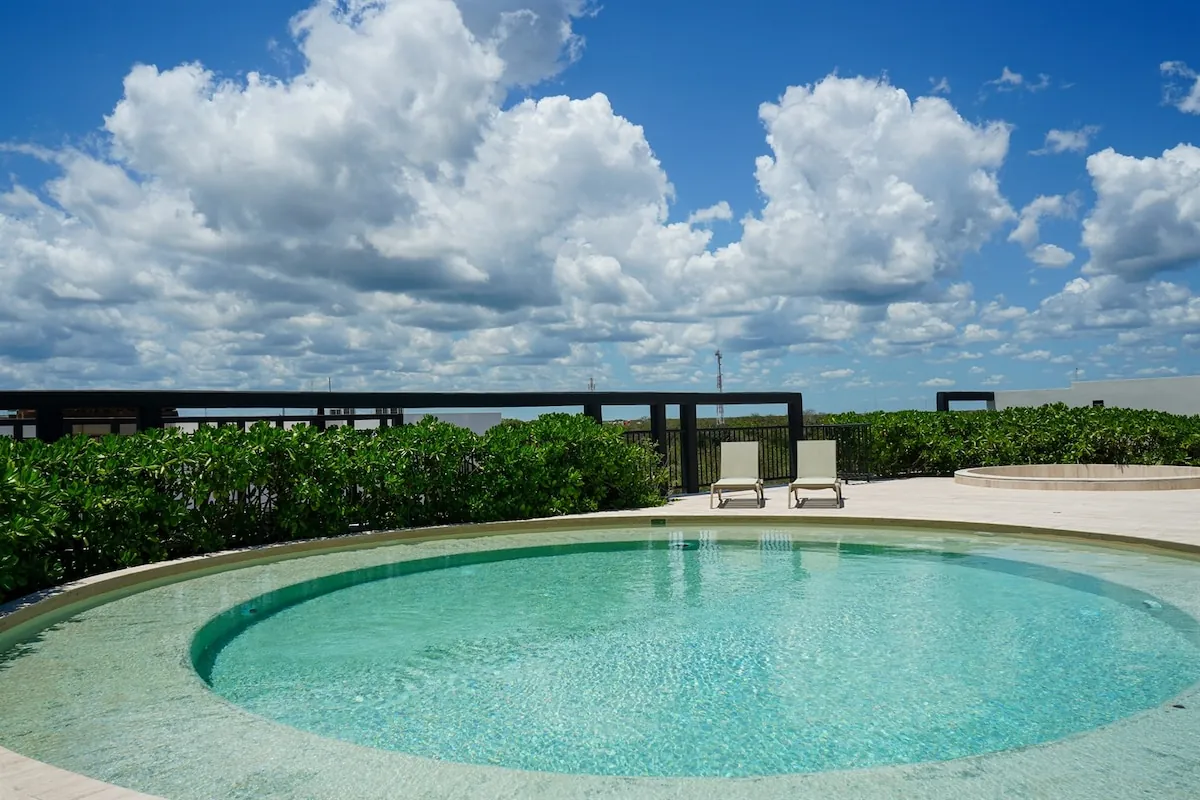
Staying downtown puts you close to the services and saves you from hotel-zone prices. A comfortable alternative is renting a full apartment with a kitchen and pool instead of a hotel room: you get more space, you can cook your own meals with what you buy at the market, and you set your own pace for outings. If you're traveling as a couple, group, or family, consider Hacienda Tuk, a 2-bedroom apartment with a pool in downtown Tulum, on Avenida Cobá, a few minutes' walk from Avenida Tulum and well located for biking to the ruins and cenotes.
Staying here also makes getting around easier: you're about 10 minutes from the beach, half an hour from Tulum Airport, and have direct access to colectivos and bikes for the rest of your plans.
Conclusion
Downtown Tulum is the most practical base for exploring the area without overspending: it has all the services, good cheap food (from Taquería Honorio to El Camello Jr.), live-music bars like Batey, and it sits a short distance from the ruins, cenotes, and beach. If you plan around a bike as your main transportation and book a place with a kitchen, you'll have a comfortable trip that's well connected to everything Tulum has to offer.
Frequently Asked Questions
What is downtown Tulum or Tulum Pueblo?
It's the urban part of Tulum, separate from the beach. It's home to Avenida Tulum, along with supermarkets, banks, pharmacies, local restaurants, and tour agencies. This is where the local community lives, and prices tend to be more affordable than in the hotel zone.
Is it worth staying downtown instead of the hotel zone?
It depends on your priorities. Downtown is more affordable, has all your daily essentials close by, and is about a 10-minute taxi ride from the beach. The hotel zone puts you right on the water, but at much higher prices. For longer stays or a tighter budget, downtown usually makes more sense.
What's the best way to get around Tulum?
A bike is the most practical and affordable option: from downtown you can reach the ruins in about 10 minutes. For short distances within town, walking is enough. Taxis are useful for the beach or nighttime trips, but they're expensive and don't use meters, so agree on the fare before you get in.
How far is downtown Tulum from the beach and the ruins?
The beach is about a 10-minute taxi ride and the Mayan ruins about a 10-minute bike ride from downtown. Gran Cenote and Cenote Calavera are 8-12 minutes away by car, which makes downtown a comfortable base for short getaways.
How do you get to downtown Tulum from the airport?
Tulum Airport (TQO) is about 30 minutes from downtown by car. If you fly into Cancún, the drive is around 1 hour 45 minutes. You can use ground transportation, a taxi, or a shared shuttle (colectivo) depending on your budget.
Where should I eat in downtown Tulum?
The pueblo classics are Taquería Honorio for a cochinita pibil breakfast, Antojitos La Chiapaneca for cheap tacos al pastor, and El Camello Jr. for seafood. Bring cash: several of these places don't take cards.
What bars are there in downtown Tulum?
The best known is Batey, on Calle Centauro Sur, famous for mojitos made with freshly pressed sugarcane and live music. Downtown nights are more relaxed and affordable than the beach clubs.